How the WMI Provider Host Affects Windows Performance—and How to Manage It
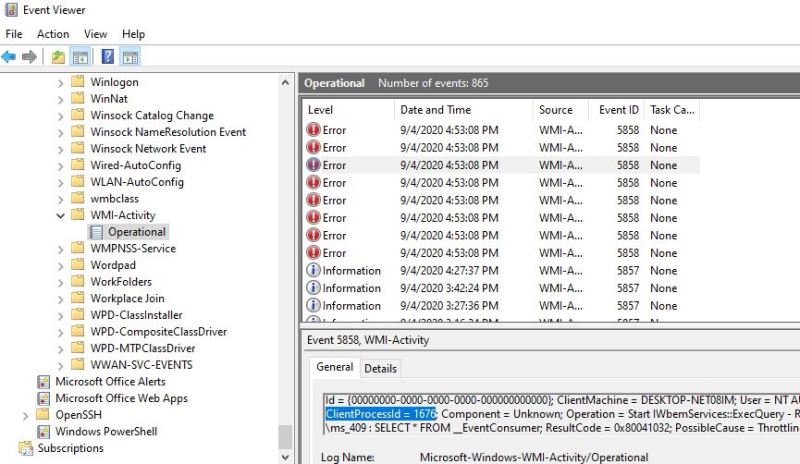
Windows systems rely on a hidden but essential architecture to maintain seamless operation—one that often goes unnoticed until it malfunctions. Among these components, the WMI Provider Host (WmiPrvSE.exe) stands out as a process that bridges Windows Management Instrumentation (WMI) with system applications. While it operates silently in the background, its behavior can dramatically impact performance, security, and stability. Users frequently encounter elevated CPU usage, unexpected crashes, or even system slowdowns linked to this process, yet few understand its true purpose or how to address issues without risking instability.
The WMI Provider Host isn’t inherently malicious—it’s a legitimate Windows service that facilitates communication between software and the operating system’s core management functions. However, its resource-intensive operations can become problematic when misconfigured, infected, or overloaded. Developers, IT administrators, and even casual users may find themselves debugging high memory consumption or unresponsive applications, only to trace the issue back to this elusive process. The challenge lies in distinguishing between normal operation and a failing system component, a task that requires both technical insight and practical experience.
Misdiagnosing WMI Provider Host issues can lead to unnecessary panic or, worse, incorrect fixes that introduce further vulnerabilities. For instance, terminating the process outright may resolve a temporary spike but leave critical system functions exposed. Meanwhile, overlooking persistent errors could allow deeper corruption to spread undetected. The key to effective management lies in understanding its role, recognizing warning signs, and applying targeted solutions—without disrupting the broader Windows ecosystem.

The Complete Overview of the WMI Provider Host
The WMI Provider Host (WmiPrvSE.exe) serves as the intermediary between Windows Management Instrumentation (WMI) and third-party applications, enabling real-time system monitoring, configuration, and automation. WMI itself is a framework that exposes system data—such as hardware status, software inventory, and performance metrics—to administrators and developers via scripts, APIs, or management tools. Without the WMI Provider Host, these interactions would stall, leaving critical tasks like Windows Update, antivirus scans, or even basic system diagnostics incomplete. Its presence is particularly pronounced in enterprise environments, where WMI-driven tools like PowerShell, Group Policy, or monitoring suites (e.g., Nagios) rely on seamless provider communication.Despite its importance, the WMI Provider Host is often misunderstood due to its opaque nature. Unlike user-facing applications, it lacks a visible interface, and its resource usage fluctuates based on active WMI queries. A sudden CPU spike might indicate a rogue script or a corrupted provider, while frequent crashes could signal deeper corruption in the WMI repository. The process itself is dynamic—Windows dynamically loads and unloads providers as needed, which can lead to confusion when troubleshooting. For example, a high memory leak in one provider might not manifest until the system is under heavy load, making it difficult to isolate the root cause without specialized tools.
Historical Background and Evolution
The origins of the WMI Provider Host trace back to Microsoft’s push for standardized system management in the late 1990s, culminating in the release of Windows 2000. WMI was introduced as a replacement for earlier technologies like Windows Management and Instrumentation (WMI) predecessors, such as the Windows Management Interface (WMI) in NT 4.0, which lacked the scalability and cross-platform compatibility of its successor. The WMI Provider Host emerged as a necessary evolution: instead of embedding provider logic directly into the Windows kernel, Microsoft decoupled it into a user-mode process, improving stability and maintainability.Over the years, the WMI Provider Host has undergone subtle but critical refinements. Windows Vista and later versions consolidated multiple providers into a single executable (WmiPrvSE.exe) to reduce overhead, while Windows 10 and 11 introduced stricter sandboxing to mitigate security risks. These changes reflect Microsoft’s dual goals: enhancing performance while hardening the system against exploits targeting WMI’s extensive privileges. However, the trade-off has been increased complexity—modern versions of the WMI Provider Host now manage a broader range of providers, from hardware drivers to third-party software, making diagnostics more challenging.
Core Mechanisms: How It Works
At its core, the WMI Provider Host functions as a container for WMI providers—software components that translate WMI queries into actionable system operations. When an application or script requests data (e.g., "List all installed software"), the WMI service routes the request to the appropriate provider, which then retrieves the information and returns it in a standardized format. This modular design allows providers to be added or removed without disrupting the entire system, a flexibility that underpins enterprise management tools.Table of Contents
- The Complete Overview of the WMI Provider Host
- Historical Background and Evolution
- Core Mechanisms: How It Works
- Key Benefits and Crucial Impact
- Major Advantages
- Comparative Analysis
- Future Trends and Innovations
- Conclusion
- Comprehensive FAQs
- Q: Is the WMI Provider Host (WmiPrvSE.exe) safe to end?
- Q: Why does my WMI Provider Host show high CPU usage?
- Q: Can malware hide in the WMI Provider Host?
- Q: How do I reset the WMI repository if it’s corrupted?
- Q: What’s the difference between WmiPrvSE.exe and Svchost.exe?
- Q: Should I disable the WMI Provider Host?
The process begins when a WMI client (e.g., PowerShell) issues a query via the WMI service (Winmgmt.exe). The service identifies the relevant provider, loads it into the WMI Provider Host (if not already active), and executes the request. Providers can be synchronous (blocking the host until completion) or asynchronous (running in the background), which explains why CPU usage may spike intermittently. The host itself is ephemeral—it spawns new instances as needed and terminates idle providers to conserve resources. This dynamic behavior is both a strength and a weakness: while it optimizes performance, it also makes it harder to pinpoint which provider is causing issues.
Key Benefits and Crucial Impact
The WMI Provider Host is the backbone of Windows’ automation and monitoring capabilities, enabling everything from software inventory tracking to real-time performance alerts. Without it, administrators would lack the granularity needed to manage large-scale deployments, and developers would struggle to build tools that interact with system internals. Its role extends beyond IT departments—even home users benefit from features like Windows Update, which relies on WMI providers to verify system compatibility before applying patches.Yet, its impact isn’t solely positive. The WMI Provider Host’s broad privileges make it a prime target for malware, particularly ransomware or spyware that exploits WMI to evade detection. Additionally, poorly written providers or corrupted WMI repositories can trigger cascading failures, leaving systems unresponsive. The balance between functionality and risk is delicate: while the process is essential, its misconfiguration can turn a stable system into a ticking time bomb.
> "WMI is like the nervous system of Windows—it connects every component, but if a single node malfunctions, the entire body can seize up." — Microsoft Windows Internals Team (2012)
Major Advantages
- Centralized Management: Consolidates system data into a single queryable interface, reducing the need for multiple tools.
- Scripting and Automation: Enables PowerShell, VBScript, and other languages to interact with hardware/software dynamically.
- Performance Monitoring: Provides real-time metrics for CPU, memory, disk, and network usage via WMI queries.
- Security Integration: Supports Group Policy, BitLocker, and other security features by exposing system state data.
- Vendor Compatibility: Allows third-party applications (e.g., antivirus, backup tools) to integrate seamlessly with Windows.

Comparative Analysis
| Aspect | WMI Provider Host (WmiPrvSE.exe) | Alternative: Windows Management Service (Winmgmt.exe) |
|---|---|---|
| Primary Role | Hosts dynamic WMI providers for real-time data access. | Core WMI service that processes queries and routes them to providers. |
| Resource Usage | Fluctuates based on active providers (CPU/memory spikes possible). | Low baseline usage; spikes only during query execution. |
| Security Risks | High (malware often targets providers for persistence). | Moderate (exploits typically require WMI query manipulation). |
| Troubleshooting Complexity | Difficult (requires provider-specific diagnostics). | Simpler (focuses on service-level issues like repository corruption). |
Future Trends and Innovations
As Windows evolves, the WMI Provider Host is poised to adapt alongside it. Microsoft’s shift toward cloud-integrated management (e.g., Windows Admin Center) suggests that WMI will remain central, but with enhanced security models to mitigate risks. Future iterations may incorporate AI-driven anomaly detection to flag rogue providers before they disrupt systems, or tighter integration with containers and virtualization platforms. However, the core challenge—balancing functionality with security—will persist, particularly as WMI’s attack surface grows with the proliferation of IoT and edge devices.One emerging trend is the adoption of WMI alternatives like CIM (Common Information Model) and REST-based APIs, which reduce dependency on traditional WMI providers. While these won’t replace the WMI Provider Host entirely, they may offload some management tasks, reducing its workload. For now, however, the process remains indispensable, and organizations must prioritize monitoring, patching, and provider hygiene to avoid disruptions.
Conclusion
The WMI Provider Host is a double-edged sword: indispensable for system management yet vulnerable to exploitation and instability. Its role in Windows’ architecture ensures that it won’t disappear anytime soon, but users must approach it with caution. Proactive monitoring—using tools like Task Manager, Resource Monitor, or PowerShell—can preempt issues before they escalate, while regular maintenance (e.g., repairing WMI repositories) keeps the system running smoothly. For IT professionals, understanding its mechanics is non-negotiable; for end-users, recognizing the signs of trouble (e.g., unexplained CPU spikes) can prevent unnecessary downtime.The key takeaway is balance: leverage the WMI Provider Host’s power without ignoring its risks. By treating it as a critical but manageable component—rather than an afterthought—users can harness its full potential while minimizing the fallout from its occasional quirks.
Comprehensive FAQs
Q: Is the WMI Provider Host (WmiPrvSE.exe) safe to end?
The process itself is legitimate, but terminating it abruptly can break system functions like Windows Update or antivirus scans. Use Task Manager’s "End Task" sparingly—only if you’ve identified a specific provider causing issues. Instead, reset the WMI repository or update drivers/providers first.
Q: Why does my WMI Provider Host show high CPU usage?
High CPU usage typically stems from:
- A rogue WMI provider (e.g., corrupted antivirus or driver provider).
- Excessive WMI queries from scripts or applications.
- Repository corruption in the WMI database.
winmgmt /verifyrepository to check for corruption and Get-WmiObject -List in PowerShell to identify active providers.
Q: Can malware hide in the WMI Provider Host?
Yes. Malware often abuses WMI to achieve persistence, lateral movement, or evasion. Signs include:
- Unrecognized providers in the WMI namespace.
- Unexpected network connections from WmiPrvSE.exe.
- Processes spawning under the host’s name.
WMIC /Node:localhost PROCESS GET Name,CommandLine and monitor for anomalies.
Q: How do I reset the WMI repository if it’s corrupted?
Follow these steps:
- Open Command Prompt as Administrator.
- Run
net stop winmgmtto stop the service. - Delete the repository folder:
rd /s /q %windir%\System32\wbem\Repository. - Restart the service:
net start winmgmt. - Windows will automatically rebuild the repository.
Q: What’s the difference between WmiPrvSE.exe and Svchost.exe?
WmiPrvSE.exe is a dedicated process for hosting WMI providers, while Svchost.exe is a generic host for multiple services. WMI providers are dynamically loaded into WmiPrvSE, whereas Svchost groups unrelated services (e.g., RPC, DCOM). High CPU in WmiPrvSE points to WMI-specific issues, whereas Svchost problems often relate to shared service conflicts.
Q: Should I disable the WMI Provider Host?
Disabling it is not recommended unless you’re in a controlled environment (e.g., a test system). WMI is deeply integrated into Windows—disabling it can break:
- Windows Update.
- Antivirus and security tools.
- PowerShell and scripting functionality.
- Group Policy and remote management.
Leave a Comment
Comments are moderated before appearing. The data you submit is processed according to the Privacy Policy of Gouv.