How to Find Drafts Twitter: The Hidden Archive of Unsent Tweets
Twitter’s draft feature remains one of its most underutilized tools—a digital notebook where ideas, half-finished thoughts, and carefully crafted tweets linger in limbo. Unlike other platforms, Twitter’s draft system doesn’t have a visible "saved" folder or a dedicated interface for retrieval. Users often abandon drafts only to later realize they’ve lost hours of work or a brilliant idea that never made it to their timeline. The problem isn’t just about recovery; it’s about understanding how Twitter’s backend processes these drafts before they vanish—or worse, get permanently overwritten.
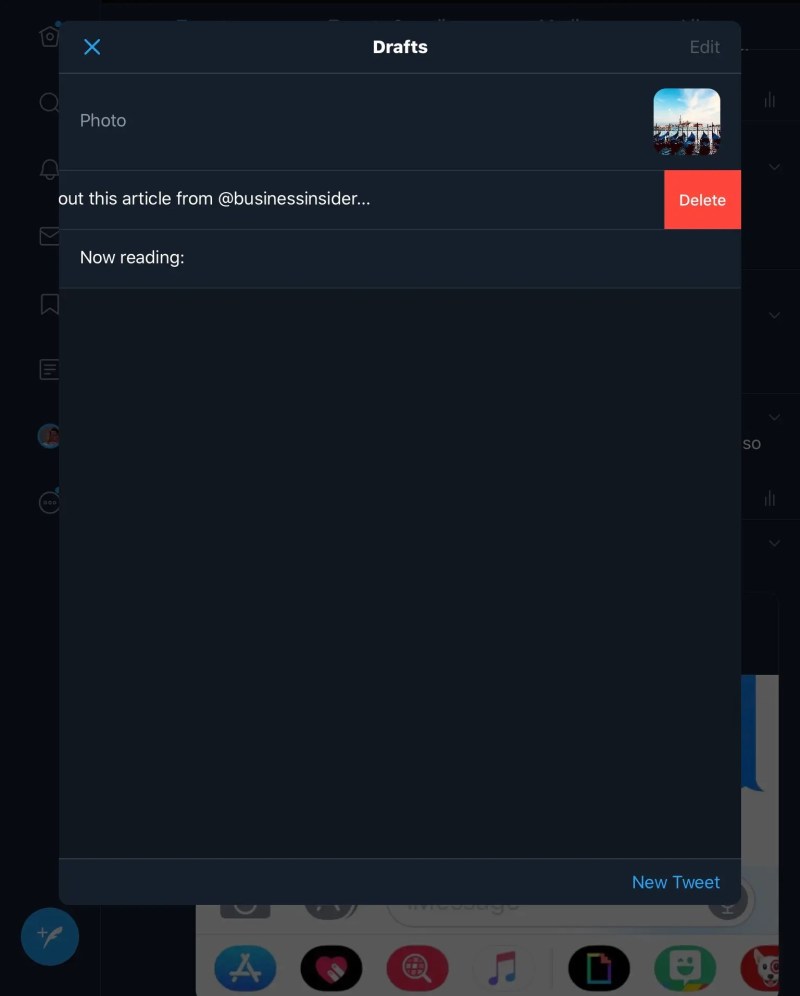
The frustration deepens when users attempt to find drafts Twitter has stored. Unlike email drafts or Google Docs revisions, Twitter’s drafts don’t sync visibly across devices, and there’s no direct button to access them. This opacity forces users into a cycle of trial-and-error: refreshing the compose box, checking browser history, or resorting to third-party tools that may violate Twitter’s terms of service. The lack of transparency extends to Twitter’s official support, which offers little guidance beyond vague assurances that drafts "should persist" until manually deleted.
What if there were a systematic way to locate unsent tweets before they disappear? The answer lies in Twitter’s hidden mechanics, browser cache behavior, and the subtle clues left behind when a draft is abandoned. Some users have successfully retrieved drafts by leveraging browser developer tools, while others rely on mobile app quirks or third-party extensions. The key, however, is knowing where to look—and when to act before Twitter’s algorithms purge the data.

The Complete Overview of Finding Twitter Drafts
Twitter’s draft system operates as a temporary storage buffer, designed to hold unsent tweets for a limited time. Unlike permanent archives, these drafts are not explicitly saved to a user’s account; instead, they reside in the platform’s backend until either sent, deleted, or overwritten by new drafts. The challenge for users is that Twitter does not provide a dedicated "drafts folder" or a straightforward method to find drafts Twitter has stored. This absence of a user-friendly interface forces reliance on indirect methods, such as browser history, cached data, or even third-party applications that scrape Twitter’s API.The process of retrieving drafts varies depending on whether the user is on the web or mobile app. On desktop, drafts are tied to the browser’s session and may persist in the DOM (Document Object Model) or local storage until the tab is closed or the browser is refreshed. Mobile users, however, face additional hurdles due to Twitter’s app architecture, which often clears drafts more aggressively. The lack of synchronization between devices further complicates recovery, as a draft created on an iPhone may not appear in the web version—or vice versa. Understanding these limitations is the first step in devising a recovery strategy.
Historical Background and Evolution
Twitter’s draft feature has evolved alongside the platform’s own transformations. Early versions of Twitter (pre-2010) had no draft functionality; users either composed tweets in real-time or lost them if they abandoned the compose box. The introduction of drafts in 2011 was a response to user demand for a way to pause and refine tweets without immediate publication. Initially, drafts were stored locally in the browser’s session storage, making them vulnerable to cache clears or tab closures. Over time, Twitter shifted to a more robust backend system, but the lack of a visible archive persisted.The opacity of Twitter’s draft system became a recurring pain point as the platform grew. Users accustomed to other social media tools—like Facebook’s "saved drafts" or LinkedIn’s "draft posts"—found Twitter’s approach frustratingly vague. In 2017, Twitter briefly experimented with a "drafts" tab in its mobile app, but the feature was quietly removed, leaving users to rely on workarounds. Today, the absence of a dedicated drafts section remains a sore spot, particularly for journalists, marketers, and content creators who depend on Twitter for real-time engagement. The platform’s reluctance to address this gap has forced users to adopt unofficial methods to find drafts Twitter has stored.
Core Mechanisms: How It Works
At its core, Twitter’s draft system relies on three primary mechanisms: session storage, local storage, and backend caching. When a user begins composing a tweet but does not send it, the platform stores the draft in the browser’s session storage (for web) or the app’s temporary memory (for mobile). This data is not synced across devices by default, meaning a draft created on a desktop browser may not appear on a mobile app. The draft persists until one of three events occurs: the user manually deletes it, sends the tweet, or closes the browser/app without saving.Table of Contents
- The Complete Overview of Finding Twitter Drafts
- Historical Background and Evolution
- Core Mechanisms: How It Works
- Key Benefits and Crucial Impact
- Major Advantages
- Comparative Analysis
- Future Trends and Innovations
- Conclusion
- Comprehensive FAQs
- Q: Can I recover a Twitter draft after closing the browser?
- Q: Are there third-party tools to find unsent tweets?
- Q: Why doesn’t Twitter have a dedicated drafts folder?
- Q: Can I sync Twitter drafts across devices?
- Q: How long do Twitter drafts last before disappearing?
- Q: What’s the safest way to back up Twitter drafts?
For web users, drafts can sometimes be recovered by inspecting the browser’s developer tools. Navigating to the "Application" tab in Chrome or Firefox reveals local storage entries where Twitter may have cached unsent tweets. Mobile users, however, have fewer options, as Twitter’s app does not expose drafts in a retrievable format. Some users report success by using third-party tools that intercept Twitter’s API calls, but these methods carry risks, including account suspension if detected as scraping. The key to locating unsent tweets lies in acting quickly—drafts are often purged within hours or after a device restart.
Key Benefits and Crucial Impact
The ability to find drafts Twitter has stored is more than a technical curiosity; it’s a strategic advantage for users who treat the platform as a professional tool. For journalists, drafts can preserve half-researched articles or interview snippets that might otherwise be lost. Marketers use drafts to refine ad copy or campaign messages before deployment, ensuring consistency across multiple platforms. Even casual users benefit from the ability to recover a well-crafted joke or a thoughtful reply that was accidentally abandoned.The impact extends beyond recovery, however. Understanding how Twitter’s draft system functions can inform better content strategies. Users who recognize the limitations of draft storage are more likely to adopt habits like saving important tweets as notes or using third-party tools for backup. The psychological relief of knowing a draft is recoverable also reduces stress for power users who rely on Twitter for real-time communication. In an era where digital footprints are permanent, the ability to revisit and refine unsent content offers a rare layer of control.
"Twitter’s draft system is a double-edged sword—it provides a safety net for users but does so in a way that feels intentionally opaque. The lack of transparency forces users to either accept the risk of losing drafts or engage in technically risky recovery methods. It’s a design choice that prioritizes simplicity over functionality."
— Social Media Architect, Tech Industry
Major Advantages
- Time Efficiency: Retrieving drafts saves hours of rework, especially for users who compose long-form tweets or threads. A single recovered draft can eliminate the need to reconstruct a well-researched idea.
- Content Consistency: Marketers and brands use drafts to maintain messaging consistency across campaigns. Losing a draft could lead to discrepancies in tone or branding, which recovery methods mitigate.
- Creative Flexibility: Drafts serve as a brainstorming tool, allowing users to experiment with different angles before finalizing a tweet. The ability to find drafts Twitter has stored preserves this iterative process.
- Accountability: For public figures and professionals, drafts act as a record of intent. Recovering a draft can clarify past decisions or provide evidence in disputes over content ownership.
- Platform Independence: While Twitter’s native draft system is flawed, understanding its mechanics enables users to adopt external solutions (e.g., note-taking apps or screen capture tools) to supplement their workflow.
Comparative Analysis
| Feature | Twitter Drafts | Alternative Platforms (e.g., LinkedIn, Facebook) |
|---|---|---|
| Visibility | Hidden; no dedicated drafts folder. Must use workarounds to find drafts Twitter. | Explicit "Drafts" or "Saved" sections in compose interfaces. |
| Persistence | Temporary; clears on tab refresh, app restart, or manual deletion. | Permanent until manually deleted; syncs across devices. |
| Recovery Methods | Browser developer tools, third-party apps (risky), or mobile app quirks. | Direct access via platform UI or account settings. |
| Use Case | Best for short-form content; not ideal for long-term storage. | Supports both short and long-form content with dedicated archives. |
Future Trends and Innovations
As Twitter continues to evolve—particularly under new ownership—the draft system may undergo significant changes. One potential innovation is the introduction of a visible drafts folder, similar to what LinkedIn and Facebook offer. This would align Twitter with user expectations and reduce reliance on unofficial recovery methods. Another possibility is integration with third-party note-taking apps (e.g., Notion, Evernote), allowing users to sync drafts seamlessly across platforms. Such a feature would not only improve usability but also cater to power users who treat Twitter as a content management tool.Looking ahead, AI-driven content suggestions could also impact draft management. Imagine a system where Twitter’s algorithm flags abandoned drafts as "potential future posts" or suggests refinements based on engagement trends. This would turn drafts from a passive storage solution into an active content optimization tool. For now, however, users must navigate the current limitations—whether by refining their own recovery techniques or advocating for better native support. The future of locating unsent tweets may lie in Twitter’s willingness to address this long-standing oversight.

Conclusion
The ability to find drafts Twitter has stored is a testament to the platform’s dual nature: a tool for spontaneous conversation and a workspace for deliberate content creation. While Twitter’s current system leaves much to be desired, the existence of workarounds proves that users are resourceful. Whether through browser hacks, mobile app persistence, or external backups, the knowledge of how drafts function empowers users to reclaim control over their digital workflows.For professionals, the stakes are higher. A lost draft isn’t just a lost tweet—it’s lost time, lost opportunities, and lost credibility. The lack of a native solution underscores a broader trend: social media platforms often prioritize speed and engagement over user convenience. As Twitter’s user base continues to grow, pressure will mount to modernize features like draft storage. Until then, the onus remains on users to adapt, innovate, and ensure their ideas don’t slip through the cracks.
Comprehensive FAQs
Q: Can I recover a Twitter draft after closing the browser?
A: Recovery depends on the browser and Twitter’s backend behavior. On desktop, drafts may persist in session storage until the browser is fully closed or refreshed. Mobile users have less chance, as Twitter’s app often clears drafts upon exit. For best results, use browser developer tools to inspect local storage before closing the tab.
Q: Are there third-party tools to find unsent tweets?
A: Yes, but with caution. Tools like "Twitter Draft Recovery" extensions or API-based scrapers can sometimes retrieve drafts, but they may violate Twitter’s terms of service. Use at your own risk, and avoid tools that require account credentials. For safer alternatives, consider screen-capturing drafts or using note-taking apps as a secondary buffer.
Q: Why doesn’t Twitter have a dedicated drafts folder?
A: Twitter’s design philosophy favors simplicity and real-time interaction over long-term content management. The platform’s core function—microblogging—doesn’t require permanent draft storage, so the feature remains hidden. User demand may eventually push Twitter to introduce a visible archive, but for now, the lack of a dedicated folder reflects the platform’s priorities.
Q: Can I sync Twitter drafts across devices?
A: No, Twitter does not natively sync drafts between web and mobile. A draft created on an iPhone won’t appear on a desktop browser, and vice versa. To mitigate this, manually copy drafts to a note-taking app or use a secondary device to access the same Twitter session. Some users also rely on browser extensions to mirror drafts, though this is unofficial.
Q: How long do Twitter drafts last before disappearing?
A: Drafts typically persist until one of three events: sending the tweet, manually deleting it, or closing the browser/app without saving. On desktop, drafts may linger for hours, while mobile drafts often vanish after a few minutes or upon app restart. There’s no guaranteed retention period, so act quickly if you suspect a draft is at risk.
Q: What’s the safest way to back up Twitter drafts?
A: The safest methods avoid third-party risks:
- Use a note-taking app (e.g., Google Keep, Notion) to manually copy drafts.
- Take screenshots of drafts before sending.
- Enable browser sync (if using desktop) to preserve session data.
- For critical content, draft tweets in a separate document first, then paste into Twitter.
Leave a Comment
Comments are moderated before appearing. The data you submit is processed according to the Privacy Policy of Gouv.