The Gulag Archipelago: How Stalin’s Forced Labor Empire Reshaped History
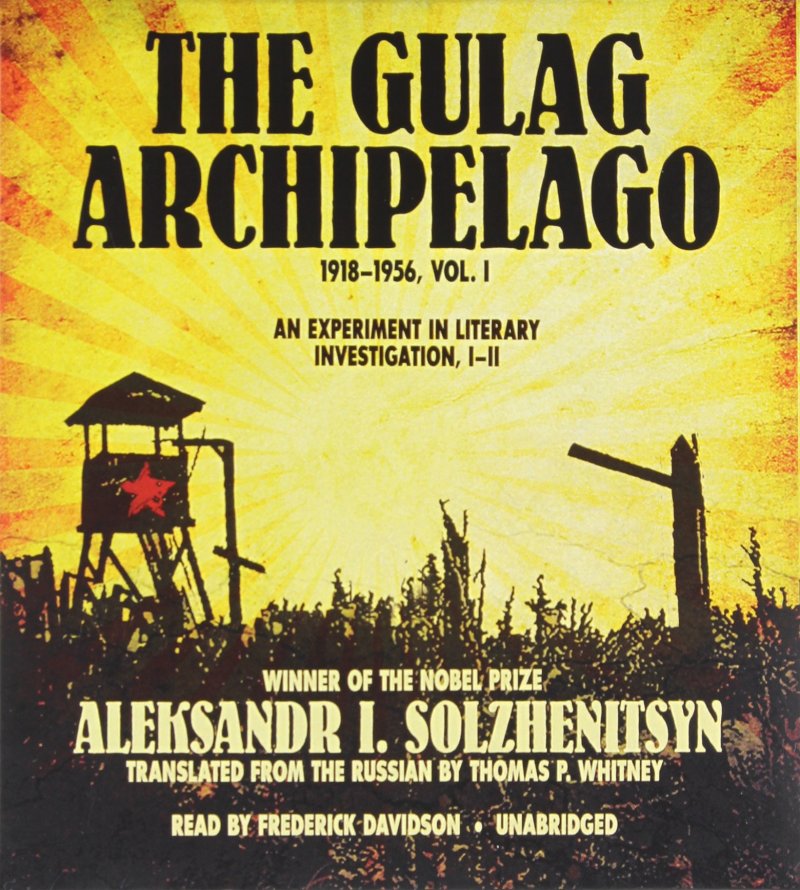
The Gulag Archipelago was not merely a collection of prison camps—it was a deliberate, industrial-scale system of human exploitation designed to crush dissent and reshape the Soviet Union’s demographic and ideological landscape. Between 1918 and 1956, an estimated 18 million people were incarcerated in its sprawling network, with millions more subjected to internal exile, forced labor, or summary execution. The term Gulag Archipelago, coined by dissident writer Aleksandr Solzhenitsyn in his 1973 magnum opus, encapsulates the archipelagic nature of the camps: scattered across Siberia, the Arctic, and remote regions of Central Asia, they formed a labyrinthine empire where the state’s will was absolute.
What makes the Gulag Archipelago particularly horrifying is its bureaucratic efficiency. Unlike ad-hoc repression, this was a system—one that evolved from the chaos of the Russian Civil War into a finely tuned instrument of control. Prisoners were categorized by crime (real or fabricated), political affiliation, or even ethnic background, with some groups—such as kulaks (wealthy peasants), ethnic minorities, and religious dissidents—systematically targeted. The camps were not just places of punishment; they were economic engines, extracting gold, timber, and other resources while breaking the spirits of those who dared oppose the regime.
The Gulag Archipelago’s legacy extends far beyond its physical boundaries. It became a metaphor for totalitarianism, a warning of what happens when a state prioritizes ideology over humanity. Yet, for decades, its full scale remained obscured behind Soviet propaganda and censorship. Only after the collapse of the USSR did the true extent of its operations emerge—revealing not just a network of camps, but a psychological and demographic catastrophe.

The Complete Overview of the Gulag Archipelago
The Gulag Archipelago was the Soviet Union’s answer to political and social purification—a vast, decentralized network of labor camps, prisons, and exile zones stretching from the Baltic to the Pacific. Officially, these facilities were justified as "corrective labor colonies" for criminals and "re-education" centers for ideological deviants. In reality, they were designed to eliminate perceived enemies of the state while simultaneously exploiting their labor. The system’s origins trace back to the Russian Civil War (1918–1922), when Bolshevik forces established the first concentration camps to detain counter-revolutionaries, White Army soldiers, and suspected "class enemies." By the 1930s, under Stalin’s rule, the Gulag Archipelago had expanded exponentially, absorbing millions during the Great Purge (1936–1938) and subsequent waves of repression.The camps were not uniform; they ranged from relatively tolerable "settlements" for less dangerous prisoners to the frozen hells of the Arctic, where mortality rates exceeded 20% annually. Some facilities, like Kolyma in northeastern Siberia, became synonymous with suffering, while others, such as the Solovki Special Camp in the White Sea, served as prototypes for the system’s expansion. The Gulag’s infrastructure was vast: barracks, mines, logging operations, and even agricultural collectives where prisoners toiled under the watch of armed guards and informants. The state’s control was total—rationing, clothing, and even correspondence were strictly regulated, ensuring that escape or rebellion was nearly impossible.
Historical Background and Evolution
The Gulag Archipelago’s evolution can be divided into distinct phases, each reflecting the Soviet Union’s shifting priorities. The first wave began in 1918 with the establishment of the Cheka (later the NKVD), which oversaw the creation of camps for "class enemies." These early facilities were brutal but small-scale, designed to intimidate rather than industrialize suffering. The second phase, during the 1920s and early 1930s, saw the system professionalize as the USSR industrialized. Stalin’s First Five-Year Plan (1928–1932) demanded rapid economic growth, and the Gulag provided a captive workforce—particularly for projects like the White Sea-Baltic Canal and the Magadan Railway, built almost entirely by prisoner labor.The third and most devastating phase occurred during the Great Terror (1936–1938), when the Gulag Archipelago became a tool of mass extermination. Political prisoners—Communist Party members accused of "Trotskyism," engineers labeled "wreckers," and even ordinary citizens denounced by neighbors—were sent en masse to the camps. The system’s scale was staggering: by 1939, an estimated 10 million people were incarcerated, with millions more exiled to remote regions. The Gulag was no longer just a labor resource; it was a mechanism for demographic engineering. Entire ethnic groups, such as the Chechens, Crimean Tatars, and Koreans, were deported en masse, their populations dispersed across Central Asia to weaken their cultural identity.
Core Mechanisms: How It Works
The Gulag Archipelago operated on a combination of terror, bureaucracy, and economic exploitation. Prisoners were classified into categories based on their perceived threat level: special settlers (exiles), convicts (criminals), and political prisoners (the most dangerous). The latter were often subjected to the harshest conditions, including solitary confinement, forced labor in subzero temperatures, and systematic starvation. The NKVD maintained a hierarchy of camps, with some offering slightly better conditions in exchange for compliance—though escape or resistance were met with immediate execution.Table of Contents
- The Complete Overview of the Gulag Archipelago
- Historical Background and Evolution
- Core Mechanisms: How It Works
- Key Benefits and Crucial Impact
- Major Advantages
- Comparative Analysis
- Future Trends and Innovations
- Conclusion
- Comprehensive FAQs
- Q: How many people were actually imprisoned in the Gulag Archipelago?
- Q: Were all Gulag prisoners political dissidents?
- Q: How did prisoners survive in the Gulag?
- Q: Did the Gulag Archipelago continue after Stalin’s death?
- Q: Are there any surviving Gulag camps today?
- Q: How has the Gulag Archipelago influenced modern Russia?
The system’s efficiency lay in its decentralization. Local officials had significant autonomy, allowing them to adapt the Gulag’s rules to their needs. For example, some camps prioritized gold mining, while others focused on timber extraction or agricultural labor. Prisoners were often moved between camps, making escape nearly impossible. The state also employed a network of informants (stakhanovites) within the camps, ensuring that dissent was swiftly crushed. Rations were deliberately inadequate, with political prisoners receiving the least food, while criminals or those who cooperated might fare slightly better. The result was a Darwinian struggle for survival, where solidarity was punished and individualism was the only path to longevity.
Key Benefits and Crucial Impact
The Gulag Archipelago was not just a tool of repression—it was an economic powerhouse. By the 1940s, it accounted for nearly 10% of Soviet industrial output, producing gold, coal, timber, and other critical resources. The camps also served as a demographic filter, eliminating "undesirable" elements while populating remote regions with loyalists. For Stalin, the system was a twofold victory: it crushed opposition while simultaneously fueling the USSR’s war economy during World War II. Yet, the human cost was incalculable—millions died from exhaustion, disease, or execution, while survivors emerged physically and psychologically broken.The Gulag’s impact extended beyond its walls. It created a culture of fear that permeated Soviet society, where denunciations, paranoia, and compliance became the norm. Even after Stalin’s death in 1953, the system persisted under Khrushchev’s "thaw," though reforms gradually dismantled the worst excesses. The camps left a scar on Russia’s collective memory, one that continues to influence political discourse today.
"The line separating good and evil passes not through states, nor between classes, nor between political parties either—but right through every human heart." —Aleksandr Solzhenitsyn, The Gulag Archipelago
Major Advantages
From the perspective of the Soviet state, the Gulag Archipelago offered several "advantages":- Labor Exploitation: Prisoners provided a free, disciplined workforce for critical infrastructure projects, including railways, mines, and industrial complexes.
- Demographic Control: The system allowed the state to resettle entire populations (e.g., ethnic deportations) while eliminating perceived threats.
- Psychological Deterrence: The threat of incarceration or exile ensured compliance among the general population, stifling dissent.
- Economic Self-Sufficiency: Camps produced goods that reduced reliance on external trade, particularly during wartime.
- Ideological Purification: By isolating and breaking "enemies of the people," the state reinforced its monopoly on truth and power.

Comparative Analysis
While the Gulag Archipelago was unique in its scale and bureaucratic precision, other totalitarian regimes employed similar methods of repression. Below is a comparative breakdown:| Gulag Archipelago (Soviet Union) | Nazi Concentration Camps (Germany) |
|---|---|
|
|
|
|
|
|
Future Trends and Innovations
The study of the Gulag Archipelago has evolved significantly since Solzhenitsyn’s work. Modern historians now employ digital archives, satellite imagery, and oral testimonies to reconstruct camp locations and prisoner experiences. Projects like the Memorial organization’s digital database have mapped thousands of camps, while academic research continues to uncover the system’s full extent. Additionally, the rise of authoritarian regimes in the 21st century has led to renewed interest in the Gulag as a cautionary tale—particularly in how states use bureaucracy to justify mass repression.Technological advancements, such as AI-driven analysis of NKVD archives, may yet reveal new details about individual fates. Meanwhile, the ethical debate over memorialization persists: Should former camp sites be preserved as museums, or left as silent witnesses to history? As global tensions rise, the lessons of the Gulag Archipelago remain urgently relevant, serving as a reminder of the dangers of unchecked state power.
Conclusion
The Gulag Archipelago was more than a collection of prison camps—it was a state-engineered nightmare that reshaped millions of lives. Its existence reveals the darkest possibilities of totalitarianism: the fusion of ideology, bureaucracy, and brute force to create a system where dissent was not just punished but erased. Yet, its legacy is also one of resilience. Survivors like Solzhenitsyn, Varlam Shalamov, and countless anonymous prisoners ensured that the truth would endure, even in the face of censorship and propaganda.Today, the Gulag Archipelago serves as a historical warning—a testament to what happens when a state prioritizes control over humanity. Its study remains essential, not just as an exercise in historical reconstruction, but as a moral imperative to prevent such atrocities from recurring.
Comprehensive FAQs
Q: How many people were actually imprisoned in the Gulag Archipelago?
A: Estimates vary, but historians generally agree that between 18 and 20 million people were incarcerated in the Gulag system between 1918 and 1956. This includes political prisoners, criminals, and ethnic minorities subjected to forced labor or exile. The actual death toll is estimated at 1.5–2 million, though some scholars argue the number could be higher when accounting for indirect causes like disease and starvation.
Q: Were all Gulag prisoners political dissidents?
A: No. While political prisoners—such as those accused of "counter-revolutionary" activities—made up a significant portion, the Gulag also held ordinary criminals, "social parasites" (homeless or unemployed individuals), and even ordinary citizens accused of minor infractions. During the 1930s, the system expanded to include entire social groups, such as kulaks (wealthy peasants) and religious believers, who were deemed threats to the state.
Q: How did prisoners survive in the Gulag?
A: Survival depended on a combination of luck, physical endurance, and often, cooperation with camp authorities. Prisoners who could perform heavy labor (e.g., mining or logging) had a better chance of receiving adequate rations. Those with useful skills—such as doctors, engineers, or craftsmen—might be assigned to less punishing roles. However, political prisoners were often targeted for the harshest conditions. Many relied on smuggling food or trading services within the camp economy. The mortality rate was staggeringly high, particularly in remote camps like Kolyma, where temperatures could drop below -50°C (-58°F).
Q: Did the Gulag Archipelago continue after Stalin’s death?
A: Yes, but its scale and brutality diminished significantly. After Stalin’s death in 1953, his successor Nikita Khrushchev initiated the "thaw," a period of partial reform that reduced the number of political prisoners and closed some camps. However, the system was not entirely dismantled—many labor camps persisted under different names, and political repression continued, albeit at a lower intensity. The Gulag’s full abolition came only with the collapse of the Soviet Union in 1991.
Q: Are there any surviving Gulag camps today?
A: Some former Gulag sites have been preserved as museums or memorials, particularly in Russia and Kazakhstan. Notable examples include:
- Perm-36 (Chkalovsky Correctional Labor Colony) – A high-security prison in the Urals.
- Vorkuta – A coal-mining town in the Arctic, once home to multiple camps.
- Magadan – A city built largely by Gulag labor, now a hub for historical tours.
- Solovki Special Camp – The first major camp, now a museum.
Q: How has the Gulag Archipelago influenced modern Russia?
A: The Gulag’s legacy is complex and deeply embedded in Russian society. On one hand, it contributed to a culture of secrecy and distrust in state institutions—a mindset that persists today. On the other hand, the camps became a symbol of Soviet brutality, which many Russians now criticize as a dark chapter of their history. The collapse of the USSR partly stemmed from public disillusionment with the regime’s excesses, including the Gulag. Today, discussions about the Gulag often intersect with debates on human rights, historical memory, and Russia’s relationship with its past. Some Russian officials have even drawn parallels between modern political repression (e.g., against dissidents like Alexei Navalny) and the Gulag’s methods, though such comparisons are controversial.
Leave a Comment
Comments are moderated before appearing. The data you submit is processed according to the Privacy Policy of Gouv.