How to Do MLA Format on Google Docs: A Step-by-Step Mastery
Google Docs has become the go-to platform for students, researchers, and professionals working on academic papers, but many struggle with applying how to do MLA format on Google Docs correctly. The Modern Language Association (MLA) style demands precision—from margins to in-text citations—and even a minor misstep can lead to deductions or rejection. Unlike Microsoft Word, Google Docs lacks built-in MLA templates, forcing users to manually adjust settings, insert hanging indents, and format citations. Yet, with the right approach, mastering how to format MLA in Google Docs can save hours of frustration and ensure compliance with academic standards.
The challenge lies in balancing Google Docs’ simplicity with MLA’s strict requirements. For instance, while Word offers a "Style" dropdown for quick formatting, Google Docs requires manual tweaks to font, spacing, and indentation. Even seasoned writers often overlook subtle details, such as the correct placement of a period after a URL in a Works Cited entry or the proper alignment of block quotes. These nuances separate a well-formatted paper from one that fails to meet institutional expectations. Understanding how to apply MLA formatting in Google Docs isn’t just about following a checklist—it’s about anticipating where errors might hide and how to avoid them.

The Complete Overview of How to Do MLA Format on Google Docs
Google Docs simplifies collaboration and cloud storage, but its flexibility can be a double-edged sword when adhering to how to do MLA format on Google Docs. The MLA Handbook (9th edition) outlines specific guidelines for page layout, font, line spacing, and citations, none of which are automatically applied in Google Docs. Users must manually configure these elements, starting with the basic document structure. For example, MLA requires a 1-inch margin on all sides, a 12-point legible font (like Times New Roman), and double spacing throughout—including the Works Cited page. Without these foundational settings, even the most meticulously researched paper risks rejection.The real complexity arises when integrating citations and references. MLA demands parenthetical citations in the text and a detailed Works Cited page at the end, both of which must be formatted with precision. Google Docs lacks a built-in citation manager, so users must either manually create citations or rely on third-party tools like Zotero or EasyBib, which require additional steps to integrate seamlessly. Additionally, MLA’s rules for block quotes, long quotations, and in-text citations (e.g., author-page format) must be applied consistently. A single misplaced comma or incorrect indentation can undermine an otherwise flawless paper, making how to format MLA in Google Docs a meticulous process.
Historical Background and Evolution
The MLA style originated in 1985 as a standardized method for humanities and liberal arts scholarship, designed to streamline citations and reduce plagiarism. Over the decades, it evolved to adapt to digital writing, with the 9th edition (2021) introducing clearer guidelines for online sources, container formats, and multimedia citations. Meanwhile, Google Docs emerged in 2006 as a cloud-based alternative to Microsoft Word, prioritizing accessibility and real-time collaboration over rigid formatting. This divergence created a gap: while MLA was refining its rules for the digital age, Google Docs offered no native support for its formatting conventions.The tension between these two systems became apparent as students and professionals increasingly turned to Google Docs for academic work. Unlike Word’s "MLA template" feature, Google Docs requires users to replicate MLA’s specifications manually—a process that demands familiarity with both the style guide and the platform’s limitations. For instance, MLA’s requirement for a hanging indent in the Works Cited page isn’t automatically applied in Google Docs; users must enable it via the "Paragraph" menu. This lack of integration forces writers to either memorize every rule or risk inconsistencies, highlighting why how to do MLA format on Google Docs remains a common point of confusion.
Core Mechanisms: How It Works
At its core, how to do MLA format on Google Docs hinges on three pillars: document structure, citation integration, and reference formatting. The first step is configuring the page layout. Open Google Docs, click "File" > "Page Setup," and ensure the margins are set to 1 inch on all sides. Next, adjust the font to 12pt Times New Roman (or another legible font) and enable double spacing via "Format" > "Line spacing" > "Double." These settings must be applied uniformly to avoid formatting discrepancies.For citations, MLA requires in-text references in the format (Author Page). Google Docs doesn’t auto-generate these, so users must insert them manually or use a citation tool like Zotero’s browser extension, which adds citations as you research. The Works Cited page is equally critical: entries must be alphabetized by author’s last name, use a hanging indent (enabled via "Format" > "Paragraph" > "Indentation options"), and follow MLA’s punctuation rules (e.g., no URLs unless accessed online). Each entry must also include the container information (e.g., website, journal) if applicable, a detail often overlooked in rushed submissions.
Key Benefits and Crucial Impact
Adopting how to do MLA format on Google Docs correctly offers more than just compliance—it enhances readability, professionalism, and academic credibility. A well-formatted paper adheres to institutional standards, reducing the risk of automatic rejection or resubmission requests. For example, a properly indented Works Cited page demonstrates attention to detail, a trait valued in peer-reviewed journals and university submissions. Additionally, consistent formatting ensures that citations are easily traceable, allowing readers to verify sources without confusion—a critical factor in scholarly work.Table of Contents
- The Complete Overview of How to Do MLA Format on Google Docs
- Historical Background and Evolution
- Core Mechanisms: How It Works
- Key Benefits and Crucial Impact
- Major Advantages
- Comparative Analysis
- Future Trends and Innovations
- Conclusion
- Comprehensive FAQs
- Q: Can I use any font in MLA format on Google Docs?
- Q: How do I add a hanging indent for the Works Cited page in Google Docs?
- Q: Does Google Docs support automatic MLA citations?
- Q: What’s the correct way to format a block quote in MLA on Google Docs?
- Q: Can I submit a Google Docs file directly in MLA format?
- Q: How do I handle URLs in MLA citations on Google Docs?
- Q: What if my professor requires a title page in MLA?
Beyond academic rigor, mastering how to format MLA in Google Docs fosters efficiency. Once the initial setup is complete, subsequent papers can reuse saved templates, cutting down on repetitive adjustments. This is particularly useful for graduate students or researchers who frequently submit work in MLA style. Moreover, the ability to collaborate in real time via Google Docs—while maintaining MLA compliance—makes group projects smoother, as all contributors can adhere to the same formatting rules without version control issues.
"Precision in formatting is not merely a technicality; it’s a reflection of the writer’s respect for their audience and the academic community." —MLA Handbook (9th Edition), 2021
Major Advantages
- Standardization: Ensures all submissions meet institutional or publisher requirements, reducing rejection risks.
- Professional Appearance: A polished, error-free document conveys competence and seriousness.
- Time Efficiency: Reusable templates and manual adjustments save hours compared to reformatting in Word.
- Collaboration-Friendly: Google Docs’ cloud-based nature allows seamless teamwork without formatting conflicts.
- Adaptability: Skills transferable to other citation styles (APA, Chicago) with minor adjustments.
Comparative Analysis
| Feature | Google Docs | Microsoft Word |
|---|---|---|
| Built-in MLA Template | No | Yes (via "Style" dropdown) |
| Hanging Indent for Works Cited | Manual (via "Paragraph" menu) | Auto-applied in templates |
| Citation Manager Integration | Requires third-party tools (Zotero, EasyBib) | Native support (via "References" tab) |
| Cloud Collaboration | Real-time editing | Limited (requires OneDrive/SharePoint) |
Future Trends and Innovations
As academic publishing shifts toward digital-first workflows, tools like Google Docs are likely to incorporate more citation-style integrations. While Google hasn’t announced native MLA support, partnerships with citation managers (e.g., Zotero’s Google Docs add-on) are improving usability. Future updates may also include AI-assisted formatting, where users could input a source, and the tool auto-generates MLA-compliant citations—a feature already available in premium Word versions.Another trend is the rise of hybrid workflows, where writers use Google Docs for drafting but export to Word for final formatting before submission. This workaround bridges the gap but adds an extra step. As institutions increasingly accept digital submissions, the pressure to standardize formatting tools may grow, potentially leading to broader adoption of MLA-compatible templates in Google Docs—or even a dedicated academic writing mode.
Conclusion
Mastering how to do MLA format on Google Docs is about more than following a checklist; it’s about understanding the interplay between digital tools and academic conventions. While Google Docs lacks native MLA support, its flexibility allows for precise manual adjustments, provided users are meticulous. The key lies in treating formatting as an iterative process: start with the basics (margins, font, spacing), then refine citations and references, and finally proofread for consistency.For those frequently working in MLA, creating a Google Docs template with pre-set styles can transform a tedious task into a streamlined routine. Whether you’re a student, researcher, or professional, investing time in how to format MLA in Google Docs today will pay dividends in clarity, credibility, and efficiency tomorrow.
Comprehensive FAQs
Q: Can I use any font in MLA format on Google Docs?
A: MLA recommends a 12-point legible font like Times New Roman, but it permits alternatives (e.g., Arial, Calibri) as long as they’re readable. Avoid decorative or non-standard fonts, as they may not meet institutional preferences.
Q: How do I add a hanging indent for the Works Cited page in Google Docs?
A: Highlight the text, go to "Format" > "Paragraph," and under "Indentation options," select "Hanging." This ensures the first line aligns with the margin while subsequent lines indent—critical for MLA’s reference list.
Q: Does Google Docs support automatic MLA citations?
A: No, but you can use third-party tools like Zotero or EasyBib to generate citations, then copy-paste them into your document. For in-text citations, manually insert (Author Page) references or use browser extensions for real-time insertion.
Q: What’s the correct way to format a block quote in MLA on Google Docs?
A: Indent the entire quote 0.5 inches from the left margin (use the "Paragraph" menu under "Indentation options"). No additional quotation marks are needed, and the quote should be double-spaced like the rest of the text.
Q: Can I submit a Google Docs file directly in MLA format?
A: Most institutions accept Google Docs links or PDF exports, but always check submission guidelines. If required, download as a PDF ("File" > "Download" > "PDF") to preserve formatting.
Q: How do I handle URLs in MLA citations on Google Docs?
A: Include URLs only for online sources (e.g., websites, databases). Access dates are optional unless the content changes frequently. Format as: Site Name. URL. Accessed Day Month Year (if needed).
Q: What if my professor requires a title page in MLA?
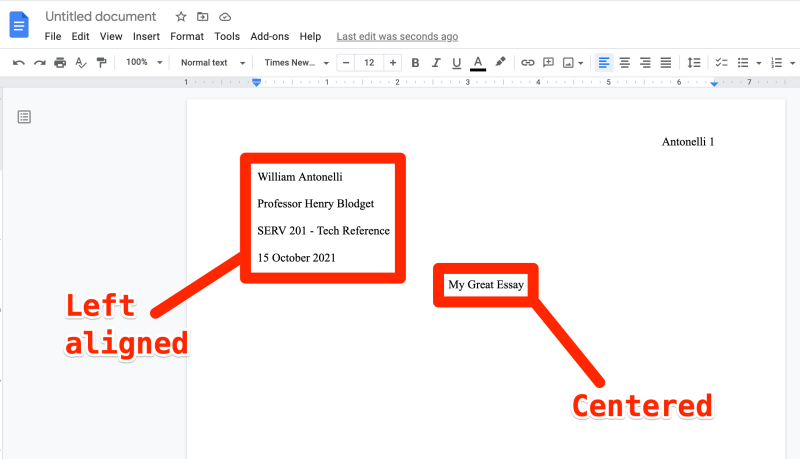
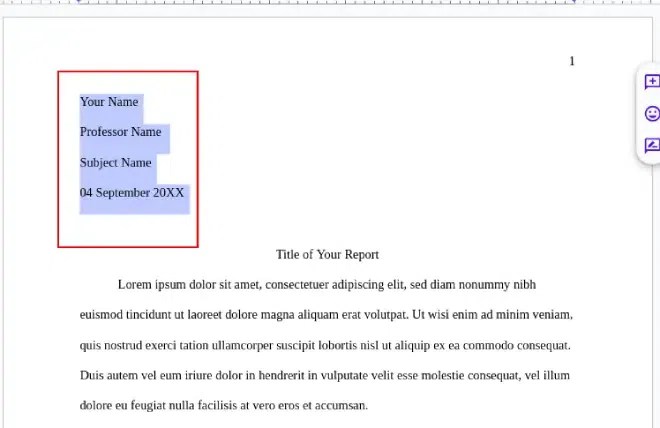
A: MLA (9th ed.) omits title pages for student papers unless specified otherwise. If required, center the title, your name, course name, instructor’s name, and date on separate lines, without bold or italics.
Leave a Comment
Comments are moderated before appearing. The data you submit is processed according to the Privacy Policy of Gouv.